
Will e-bike brands lose their identity in the digital era, or regain it in time?
For a few years now, the most memorable brand on an e-bike has been the label on the motor, not the name on the frame. When torque figures and component call-outs become the main selling point instead of a full brand experience, the bike brand becomes interchangeable, and the ingredient brands keep gaining more of the narrative and genuinely the (digital) user experience. Avinox is only the latest example of how fast that can happen. As a bike brand, why then act surprised when a customer in the shop asks for the motor, not the brand?
The digital era adds another lever the industry doesn't talk about enough: connectivity and data, which shape the ownership experience, build a direct rider relationship, and strengthen, or weaken, brand identity long after the sale.
Who owns that connectivity and data, the bike brand or the system supplier? Is it bundled with the drive system, or sourced separately? Is the ecosystem closed or open? Who controls the digital interface, the user data, and the product roadmap? These are strategic questions, and bike brands need to weigh the risks and opportunities strategically before chasing any short-term win.
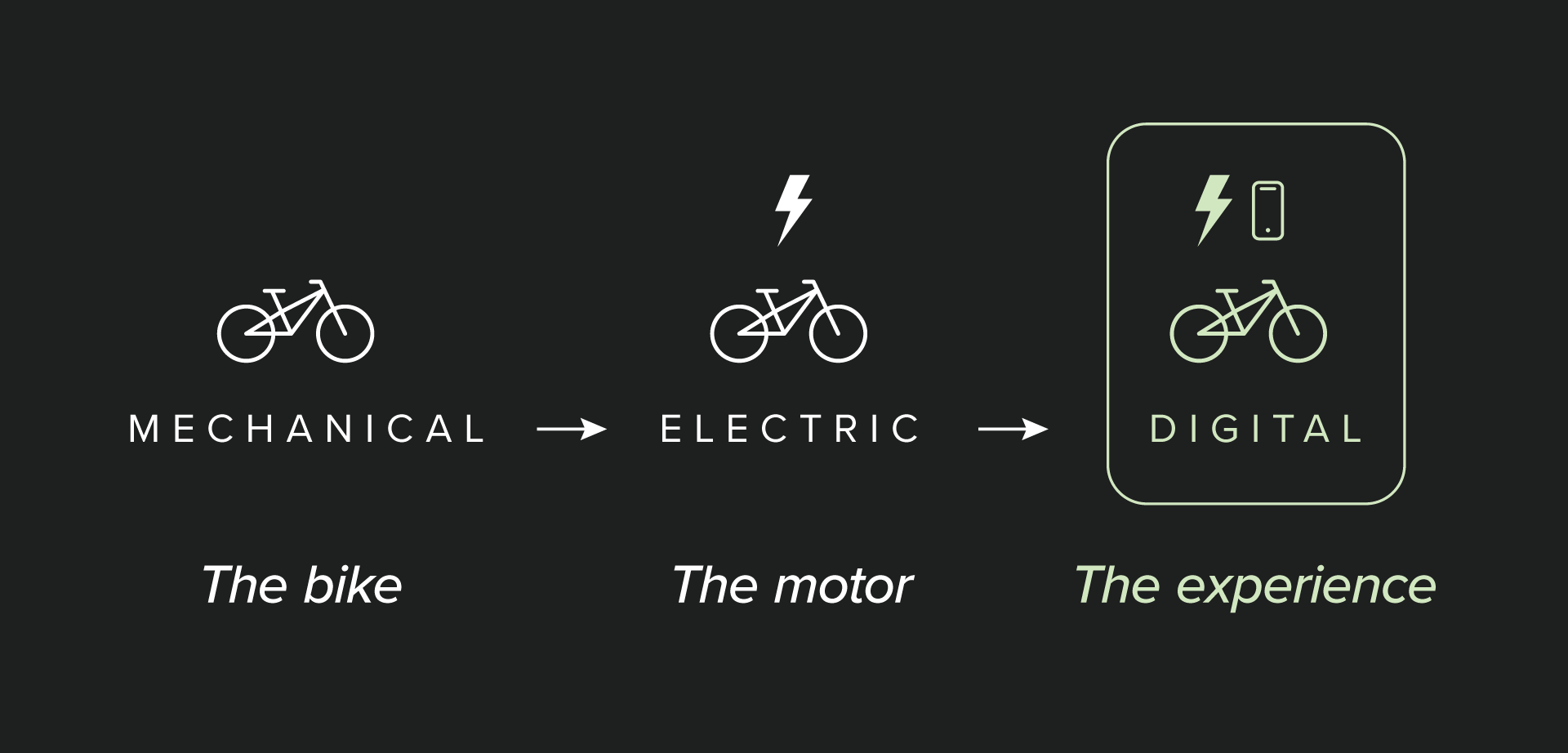
The 3 eras of the bike industry: The bike defined the mechanical era. The motor defined the electric era. The experience will define the digital era.
Recalling the Nokia moment
The basis of competition has simply moved. Apple and Google built the operating systems, the accounts, and the ecosystems around the “smart” phone, and those layers increasingly defined the user experience and controlled the customer relationship. Hardware remained essential, but it stopped being where the strategic value standed.
We saw a similar pattern at this year's Eurobike. Car and bike trade shows alike are becoming less about the vehicle and more about who controls the technology platform around it, and we have witnessed Chinese manufacturers moving fastest on both fronts. In cars, that competition is direct, brand against brand. In bikes, it's happening one layer down: a single drive-system supplier can enter tens of brands at once, bringing its own app, account, and ecosystem along with the motor.
The next competitive battle isn't only about who builds the best vehicle. It's about the experience: who owns the software layer, the data, and the customer relationship built on top of it, and the drivetrain and connectivity decisions made today will decide who controls that layer for years.
Closed systems are convenient, but not neutral
Once a closed system supplier owns the experience: the user communication, interface, and data, they own the strategic edge of the customer. Reclaiming it later is difficult and expensive. That's why the drivetrain decision for a bike brand is no longer just a comparison of torque, weight, and price but rather a strategic decision.
A closed ecosystem can still be the right call for some brands, it offers a polished product and a fast route to market. But the trade-off needs to be understood clearly: the platform provider usually sets the application, the account structure, the feature roadmap, and often the subscription model. The bike brand gets selected data and some branding options, but no real say in how that data is used, how the product evolves, or how it gets priced. That's the actual decision being made, not just a drivetrain choice, but who controls the interface, the data, and the customer relationship for years to come.
Can the bike brand still own the digital experience?
An alternative is choosing a system provider built around an open ecosystem, or a neutral connectivity partner on top of it: documented interfaces and clear contractual terms that keep the bike brand in control of its own product and the user experience.
Own the consumer-facing app and account relationship
Access relevant vehicle data and consented rider data
Build services around its own brand promise, differentiate with digital features.
Integrate different motors, locks, displays, and other components
Control pricing, subscriptions, and lifecycle communication
Change suppliers without rebuilding the entire digital business
A genuinely open connectivity layer gives an OEM architectural flexibility and commercial control: partners provide the technology, the brand stays responsible for the experience. Brands don't need to build the entire stack themselves. They need to decide which layers are too strategically important to hand over.
Motor specifications are not brand identity
Before choosing a technology platform, an OEM should ask a more fundamental question: what is our moat? If competitors can buy the same motor, battery and digital platform, differentiation must come from the complete experience the brand delivers. That includes the product itself, but also dealer relationships, service, aftersales support and the ongoing rider experience. Connectivity should strengthen those advantages, not transfer the customer relationship to a supplier.
When every brand communicates through torque numbers, the logical outcome is components that are easier to compare and harder to differentiate, and more price pressure as a result.
A brand's identity should be built around experience: what makes owning and using its bikes different, not the motor spec sheet:
Cargo-bike brand: uptime, serviceability, fleet intelligence
Family-bike brand: safety, recovery, peace of mind
Urban brand: effortless daily mobility
Performance brand: personalized tuning and an experience that improves over time
Software and connectivity can turn those promises into real features, but only if the brand controls enough of the application, data, and roadmap to build something a competitor can't copy just by buying the same motor:
Cargo-bike brand: a smart maintenance service based on bike health data
Family-bike brand: digital bike access, smart security and safety features
Urban brand: automatic locking, voice assist, smart navigation and riding data
Performance brand: ride-mode tuning that adapts to the rider's own style and terrain over time
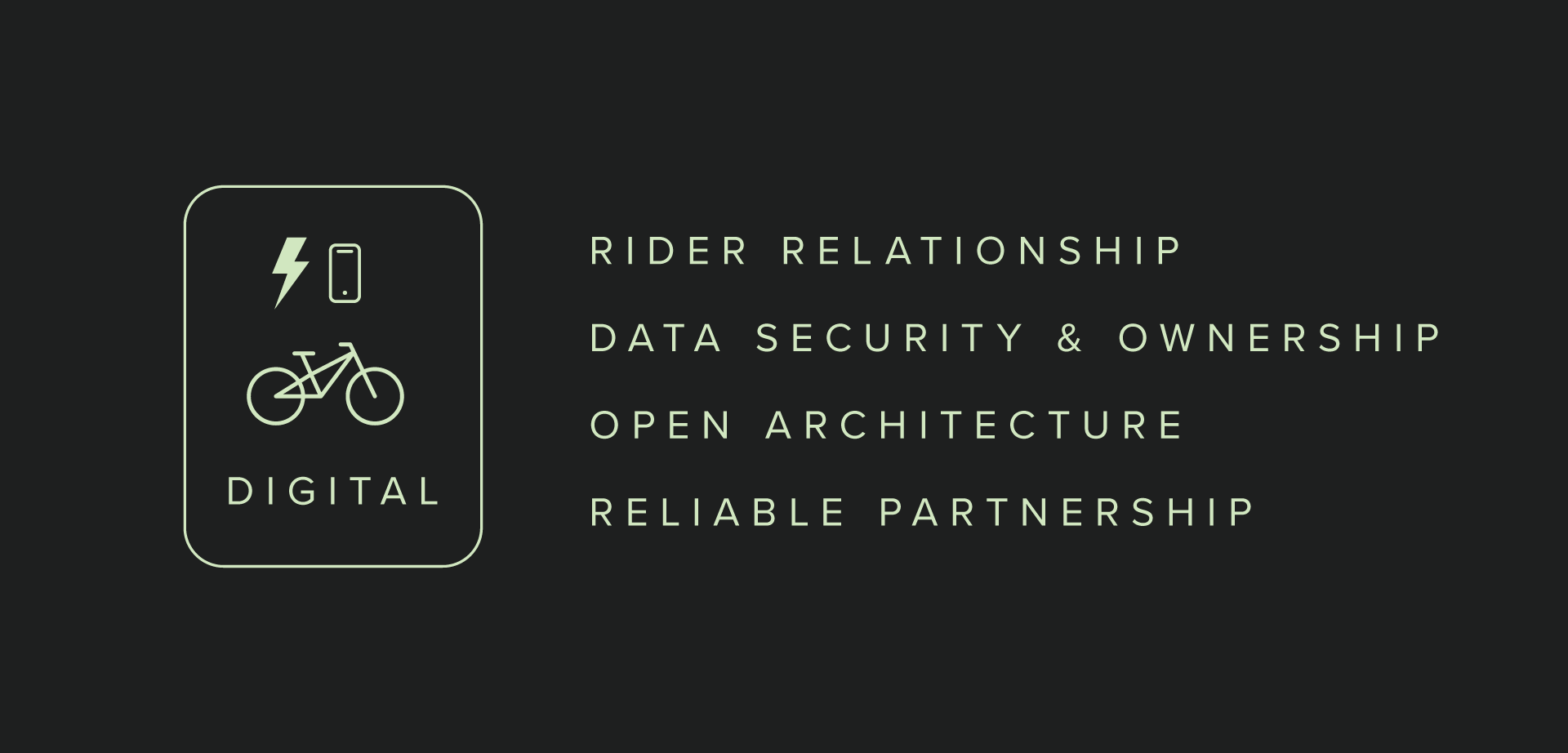
Why connectivity providers must be chosen as strategic partners
Connectivity shouldn't be evaluated as another line in the bill of materials. The provider will operate inside the product, handle sensitive data, and shape the rider experience for most of the bike's life. Before signing, OEM leadership should be able to answer four questions:
Who controls the rider relationship? Who owns the app, and what tools exist to actually use the data it collects, not just view it?
How is the data collected, processed, and stored, and is it GDPR compliant?
How open is the architecture? How far can it be customized or extended, and can the brand move to its own app or back end later if it wants to?
Does the provider have a proven track record? Where are its products developed and certified, and how mature is the system in the field?
There is no neutral option left
Connectivity will be in the next generation of e-bikes whether a brand plans for it or not. Choosing not to build a connectivity strategy just delegates that decision to whichever component supplier shows up with an app already attached.
The bike is still a physical product, but more of its value and differentiation will come from the software and data layered on top of it. The strongest brands won't necessarily build every layer themselves. They'll know which layers they have to control, choose partners that protect that control, and use connectivity to express what actually makes them different.