The kill switch effect makes e-bike theft meaningless
Bike theft is a growing concern, affecting millions of cyclists each year. E-bikes are currently the primary driver behind a global bike theft epidemic. According to the 2025 Bike Index Annual Bike Theft Report, the situation is blunt:
You are now 2.5 times more likely to have your e-bike stolen than your car.
The recovery rate for e-bikes is an abysmal 4%.
11% of victims never buy a replacement bike, a statistic that’s bad news for the industry's future.
E-bike owners expect that security features come with the bike
With average prices up to 5000 EUR, consumers are starting to demand the same level of security they expect from their iPhones or their cars. An increasing number of e-bike brands reach for technology to solve this issue, providing riders with smart security features, mostly GPS tracking and movement alerts. While these are great functionalities, they are mostly reactive features (in case the theft is already happening or has happened) and just a part of what connectivity technology can do to prevent theft on a scale that’s needed.
Reducing bike theft by reducing human errors
What caught our eye is a trend highlighted in the previously mentioned 2025 Bike Index report, 59% of bike thefts occur in residential areas. That’s people's garages, apartment basements, and porches. Thieves are moving away from street-side grabs and toward targeted residential burglaries.
The problem is twofold:
Many riders don't lock their bikes when they are safely inside their own garage or hallway. Let’s call it the safety illusion.
In case of an e-bike, if a bike isn’t digitally locked, it won't trigger a movement notification. And security is only effective if it’s used. Owners often discover the theft hours or even days later, giving thieves a head start.
In this situation, the auto-lock functionality is helpful as it locks the e-bike automatically and triggers the digital immobilizer when its owner walks away from it. Even if a rider forgets to secure their bike after a long commute, the IoT doesn't. Because the bike is always armed, any unauthorized movement triggers an instant smartphone notification.
In a perfect scenario, the rider sees the notification and can react immediately. In reality, if the bike is taken while the owner is asleep, it’s stripped before the first notification is even seen. In this case, we need to have an additional layer of protection against theft.
The kill switch effect
Other industries have gone through the same issues, and the bike industry can learn from them. iPhone thefts plummeted by a staggering 50% by introducing the kill switch. Apple allowed users to remotely brick stolen devices. This destroyed the secondary market overnight. If a thief can’t sell it, they won't steal it.
We’ve seen this play out before with cars as well. In the 1990s, car theft rates collapsed. This wasn't because cars became harder to physically tow, it was the introduction of the digital immobilizer. Before the immobilizer, a car could be hotwired in seconds. After that, the engine simply wouldn't start without the encrypted digital key.
The effort-to-reward ratio shifted for thieves. Both iPhones and cars became virtually unusable and, therefore, pointless to steal.
Widespread use of digital immobilizers can tackle e-bike thefts
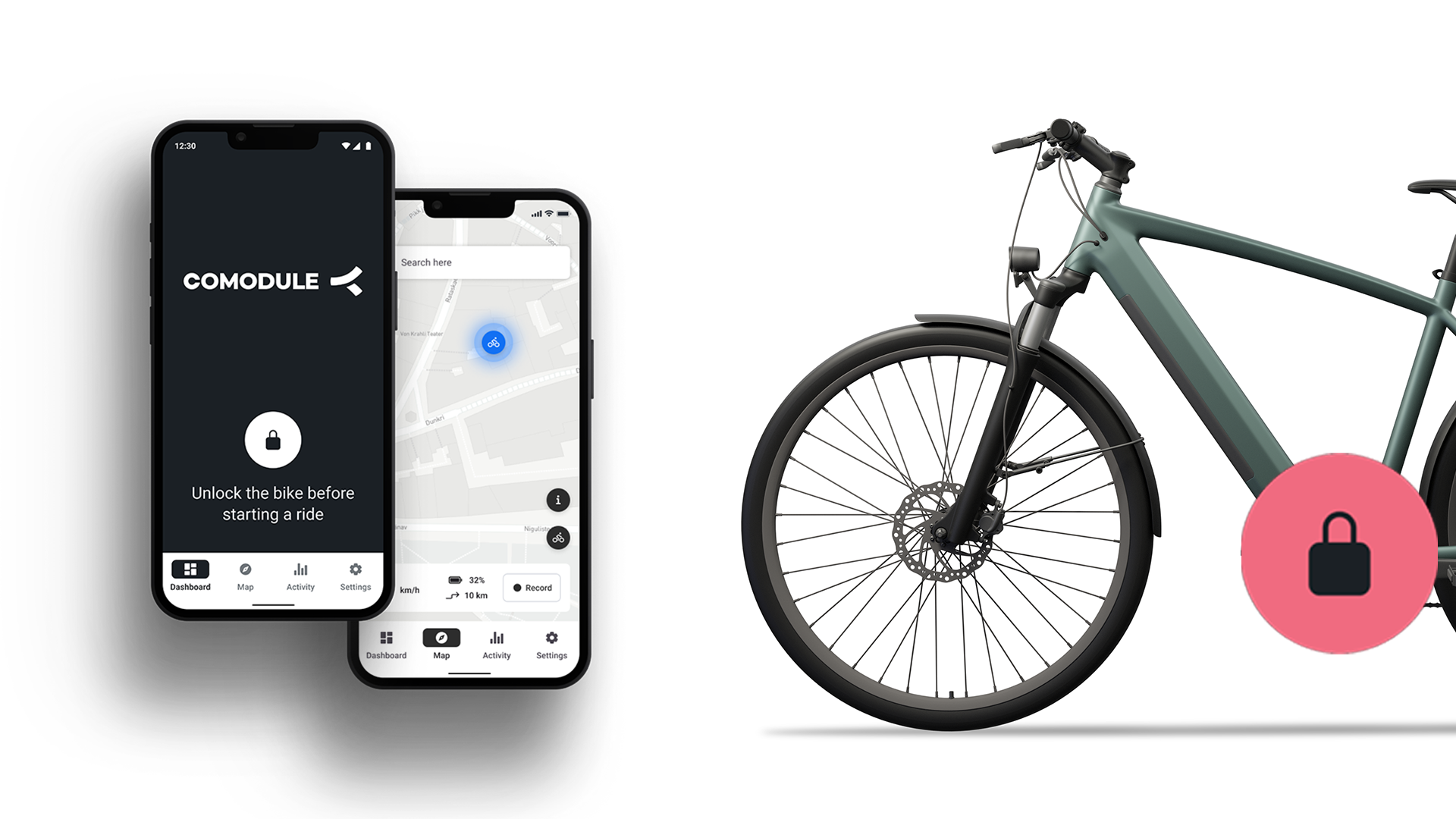
Using a similar approach and implementing system-level immobilization on a wide scale to most e-bikes, we can tackle the growing number of e-bikes once and for all. Comodule’s technology integrates directly with the e-bike’s motor and drive unit to shut the bike down and make it unusable:
Through the app, an owner can remotely lock the drive system. The e-bike essentially becomes a 25kg paperweight.
We can digitally link the components to the bike’s ID. If the battery and motor won't work on another frame, they become worthless on the black market.
Just as it did for the iPhone and cars, when stealing an e-bike becomes more trouble than it’s worth, theft rates will follow.
Making bike theft obsolete is in the industry’s hands
Bike theft should not be a rite of passage for riders. We cannot solve a 1.4 billion EUR problem with better mechanical locks alone, we need to catch up with other sectors that have long embraced technology for security.
By implementing digital immobilizers on a scale, we are giving bike manufacturers the power to protect their customers, their bikes, and the future of clean urban transport. We don’t just want to help you find your bike, we want to make sure no one wants to steal it in the first place. With connectivity, we can do more than just watch an e-bike theft happen, we can neutralize it. Or at least decrease it.